Equalized odds, also referred to as conditional procedure accuracy equality and disparate mistreatment, is a measure of fairness in machine learning. A classifier satisfies this definition if the subjects in the protected and unprotected groups have equal true positive rate and equal false positive rate, satisfying the formula: P ( R = + | Y = y , A = a ) = P ( R = + | Y = y , A = b ) y ∈ { + , − } ∀ a , b ∈ A {\displaystyle P(R=+|Y=y,A=a)=P(R=+|Y=y,A=b)\quad y\in \{+,-\}\quad \forall a,b\in A} For example, A {\displaystyle A} could be gender, race, or any other characteristics that we want to be free of bias, while Y {\displaystyle Y} would be whether the person is qualified for the degree, and the output R {\displaystyle R} would be the school's decision whether to offer the person to study for the degree. In this context, higher university enrollment rates of African Americans compared to whites with similar test scores might be necessary to fulfill the condition of equalized odds, if the "base rate" of Y {\displaystyle Y} differs between the groups. The concept was originally defined for binary-valued Y {\displaystyle Y} . In 2017, Woodworth et al. generalized the concept further for multiple classes.
Elastic cloud storage
An elastic cloud is a cloud computing offering that provides variable service levels based on changing needs. Elasticity is an attribute that can be applied to most cloud services. It states that the capacity and performance of any given cloud service can expand or contract according to a customer's requirements and that this can potentially be changed automatically as a consequence of some software-driven event or, at worst, can be reconfigured quickly by the customer's infrastructure management team. Elasticity has been described as one of the five main principles of cloud computing by Rosenburg and Mateos in The Cloud at Your Service - Manning 2011. == History == Cloud computing was first described by Gillet and Kapor in 1996; however, the first practical implementation was a consequence of a strategy to leverage Amazon's excess data center capacity. Amazon and other pioneers of the commercial use of this technology were primarily interested in providing a “public” cloud service, whereby they could offer customers the benefits of using the cloud, particularly the utility-based pricing model benefit. Other suppliers followed suit with a range of cloud-based models all offering elasticity as a core component, but these suppliers were only offering this service as an element of their public cloud service. Due to perceived weaknesses in security, or at least a lack of proven compliance, many organizations, particularly in the financial and public sectors, have been slow adopters of cloud technologies. These wary organizations can achieve some of the benefits of cloud computing by adopting private cloud technologies. An alternative form of the elastic cloud has been offered by vendors such as EMC and IBM, whereby the service is based around an enterprise's own infrastructure but still retains elements of elasticity and the potential to bill by consumption. == Description == Elasticity in cloud computing is the ability for the organization to adjust its storage requirements in terms of capacity and processing with respect to operational requirements. This has the following benefits: Operational Benefits - Services can be acquired quickly, meaning that the evolving requirements of the business can be addressed almost immediately, giving an organization a potential agility advantage. A properly implemented elastic system will provision/de-provision according to application demands, so if a particular business has activity spikes then the provision can be enabled to match the demand and the capacity can be re-allocated. Research and Development (R&D) Projects - R&D activities are no longer hindered by a requirement to secure a capex budget prior to a project starting. Capability can simply be provisioned from the cloud and released at the end of the exercise. Testing and Deployment - With most large-scale projects a size test needs to be performed prior to final rollout. By taking advantage of the elasticity of the cloud and creating a full-scale avatar of the proposed production system, realistic data and traffic volumes can be provisioned and released as needed. Expensive Resources Allocated - This will normally apply only in the context where a customer is applying at least some of their own servers as part of a cloud infrastructure, specifically where a business (for performance reasons) has decided to invest in solid-state storage as opposed to spinning platters. There are instances when, due to activity spikes, a less critical process may need to be moved from the high-performance resources to more traditional storage. Server Specification - When a customer has elected to own/lease hardware, they can select and specify servers that are specifically tuned to meet the likely needs of their operation (i.e., directly controlling the cost/benefit equation). Utility Based Payments - There is, of course, a key cost driver in this process, and the notion that you should pay for what you consume is acceptable for many organizations. When hardware capacity is sourced internally, organizations need to over-provision. This applies just as much to traditional outsourcing as it does to capex-related expenditure on in-house servers. Cloud Platform – At the heart of any cloud storage system is the ability to manage hyperscale object storage and a Hadoop Distributed Files System (HDFS). Elastic storage capability is particularly well suited to hyperscale and Hadoop environments, where its capability to rapidly respond to changing circumstances and priorities is essential
Rabbit r1
The Rabbit r1 is an artificial intelligence personal assistant device developed by the American technology startup Rabbit Inc and co-designed by Teenage Engineering. It was announced at the 2024 Consumer Electronics Show as a handheld device intended to perform digital tasks through voice commands, touch interaction, and web-based AI agents. The r1 was marketed around Rabbit's concept of a "large action model" (LAM), which the company described as software able to operate websites and services on behalf of users. The device runs rabbitOS, an operating system based on the Android Open Source Project. Its services have included AI search, image recognition, voice interaction, music playback, rideshare and food-ordering integrations, and later experimental web-agent features such as LAM Playground and teach mode. Initial reviews were largely negative, with reviewers criticizing the device's limited functionality, bugs, and unclear advantages over a smartphone. Critics also questioned Rabbit's claims after the r1 software was shown to run on an Android phone. Rabbit continued to issue software updates after launch, including rabbitOS 2 in September 2025, which introduced a redesigned card-based interface, gesture navigation, and a "creations" feature for generating small software tools and experiences on the device. Rabbit Inc was founded by Jesse Lyu Cheng. == Hardware == Display: A 2.88-inch touchscreen for interactive user input. Input: push-to-talk button to activate voice commands; scroll wheel; Gyroscope; Magnetometer; Accelerometer; GPS. Camera: 8 MP single camera, with a resolution of 3264x2448, allowing for the connected external AI to use computer vision. Audio: Equipped with a speaker and dual microphones for audio interaction. Connectivity: Supports Wi-Fi and cellular connections via a SIM card slot to access internet services. Processor: Runs on a 2.3GHz MediaTek Helio P35 processor. Memory: Contains 4GB of RAM for operational tasks. Storage: Offers 128GB of internal storage for data. Ports: Utilizes a USB-C port for charging and data connections. == Software == The Rabbit r1 runs rabbitOS, which is based on the Android Open Source Project (AOSP), specifically Android 13. Rabbit founder Jesse Lyu described rabbitOS as a "very bespoke AOSP" after reports that the r1's software could be run on a conventional Android phone. Rabbit described the r1 as using a large action model (LAM), a type of AI agent intended to perform tasks across software interfaces rather than only answer questions. At launch, the device supported a limited set of services, including AI search, vision features, music playback, and some third-party integrations. Perplexity.ai was one of the AI services used to answer user queries. In 2024, Rabbit released several software updates that added features and attempted to address early criticism of the device. In July 2024, the company launched "beta rabbit", an advanced search and conversation mode for more complex queries. In October 2024, it released LAM Playground, a web-based agent feature intended to let the r1 operate websites on behalf of users. Reviewers found the feature experimental; Android Authority reported that it could perform some navigation tasks but struggled with CAPTCHAs, loops, and unintended behavior. In November 2024, Rabbit introduced a beta "teach mode", which allowed users to demonstrate web-based tasks in the Rabbithole web portal and later ask the r1 to repeat them. The company described teach mode as experimental, and The Verge noted that Rabbit warned users that results could be unpredictable and that CAPTCHA-protected sites could cause problems. Rabbit released rabbitOS 2 in September 2025. The update redesigned the interface around a card-based layout, added additional touchscreen gestures, and introduced "creations", a feature that lets users generate simple software tools, games, and interfaces through natural-language prompts. Coverage of the update described it as a major software overhaul rather than new hardware. == Reception == === Funding === Rabbit raised $20 million in funding from Khosla Ventures, Synergis Capital and Kakao Investment in October 2023. The company announced an additional $10 million in funding in December 2023. === Sales === Following its announcement at the 2024 Consumer Electronics Show, 130,000 units were sold. On August 13, 2024, Rabbit announced that sales of r1 had expanded to the entire European Union (except Malta) and United Kingdom. On August 21, 2024, sales of r1 expanded to Singapore. === Reviews === The r1 was met with strong criticism immediately after Rabbit began shipping the device. Some reviews questioned what the device was able to do that a smartphone could not, while comparing it to the similar Humane Ai Pin. YouTuber Marques Brownlee called the device "barely reviewable". Android Authority's Mishaal Rahman managed to install Rabbit r1's software on a Pixel 6a smartphone, after a tipster shared an APK file. The Verge echoed the claims made by Rahman. In response, Lyu published statements confirming its use of Android, but denying that the r1 is an Android app. Mashable called its Vision features impressive, but said that "these praise-worthy features are overshadowed by buggy performance". Ars Technica wrote a blog post claiming "the company is blocking access from bootleg APKs". TechCrunch gave a slightly more positive review, calling the device a "fun peep at a possible future", but could not "advise anyone to buy one now." Shortly after the launch of r1, Rabbit began a weekly cadence of software updates to address much of the criticism from the early reviews, including "battery and GPS performance, time zone selection, and more". Digital Trends said the Magic Camera feature "takes the most mundane, ordinary, and badly composed photos and makes something fun and eye-catching from them." Mashable said the "beta rabbit" feature "makes Rabbit R1 more conversational and intelligent". Later coverage noted that Rabbit continued to update the r1 after its poorly received launch. The Verge reported in September 2024 that about 5,000 of roughly 100,000 purchasers were using the device at any given moment, citing Lyu, and described the product as having launched before it was ready. In 2025, coverage of rabbitOS 2 described the update as an attempt to reset the device's software experience after the criticism of its original release. == Controversies == === GAMA project === Rabbit Inc has garnered attention due to allegations surrounding its funding and the company's past projects. The company came under scrutiny when Stephen Findeisen, known as Coffeezilla on YouTube, published a video in May 2024, alleging that Rabbit Incorporation was "built on a scam". Rabbit Incorporation, initially named Cyber Manufacturing Co, rebranded just two months before launching the Rabbit R1. The company, under its former name, raised $6 million in November 2021 for a project called GAMA, described as a "Next Generation NFT Project." Jesse Lyu, the CEO of Rabbit Incorporation, referred to GAMA as a "fun little project." Coffeezilla, who investigates influencer scams, highlighted old Clubhouse recordings of Jesse Lyu discussing the GAMA project. In these recordings, Lyu emphasized the substantial funding behind GAMA and its potential to be a revolutionary, carbon-negative cryptocurrency. Coffeezilla questioned the whereabouts of the funds raised for GAMA, estimating that approximately $1 million in refunds to investors remained unresolved. He suggested that the rebranding to Rabbit Incorporation and the shift to developing the Rabbit R1 were attempts to divert from the GAMA project's issues. In response to Coffeezilla's inquiries, Rabbit Incorporation stated that the $6 million raised was used for the GAMA project. The company said that NFTs cannot be refunded unless the owner agrees to "burn" them on the blockchain. Rabbit Incorporation also said that the GAMA project was open-sourced and returned to the community, aligning with community feedback. They also mentioned that efforts to buy back NFTs were made to counteract malicious trading and maintain market stability. === Security === In June 2024, Engadget reported that the Rabbitude team, a community reverse engineering project, had gained access to the r1's codebase revealing that r1's software contained several hardcoded API keys in its code for ElevenLabs, Microsoft Azure, Yelp, and Google Maps, potentially allowing unauthorized access to r1 responses, including those containing the users' personal information. For a short time, Rabbit immediately began revoking and rotating those secrets and confirmed that the code was leaked by an employee who had "been terminated and remains under investigation". In July 2024, the company revealed that all user chats and device pairing data were logged on the r1 with no ability to delete them. This meant that lost or stolen devices could be used to extract user
Reparameterization trick
The reparameterization trick (aka "reparameterization gradient estimator") is a technique used in statistical machine learning, particularly in variational inference, variational autoencoders, and stochastic optimization. It allows for the efficient computation of gradients through random variables, enabling the optimization of parametric probability models using stochastic gradient descent, and the variance reduction of estimators. It was developed in the 1980s in operations research, under the name of "pathwise gradients", or "stochastic gradients". Its use in variational inference was proposed in 2013. == Mathematics == Let z {\displaystyle z} be a random variable with distribution q ϕ ( z ) {\displaystyle q_{\phi }(z)} , where ϕ {\displaystyle \phi } is a vector containing the parameters of the distribution. === REINFORCE estimator === Consider an objective function of the form: L ( ϕ ) = E z ∼ q ϕ ( z ) [ f ( z ) ] {\displaystyle L(\phi )=\mathbb {E} _{z\sim q_{\phi }(z)}[f(z)]} Without the reparameterization trick, estimating the gradient ∇ ϕ L ( ϕ ) {\displaystyle \nabla _{\phi }L(\phi )} can be challenging, because the parameter appears in the random variable itself. In more detail, we have to statistically estimate: ∇ ϕ L ( ϕ ) = ∇ ϕ ∫ d z q ϕ ( z ) f ( z ) {\displaystyle \nabla _{\phi }L(\phi )=\nabla _{\phi }\int dz\;q_{\phi }(z)f(z)} The REINFORCE estimator, widely used in reinforcement learning and especially policy gradient, uses the following equality: ∇ ϕ L ( ϕ ) = ∫ d z q ϕ ( z ) ∇ ϕ ( ln q ϕ ( z ) ) f ( z ) = E z ∼ q ϕ ( z ) [ ∇ ϕ ( ln q ϕ ( z ) ) f ( z ) ] {\displaystyle \nabla _{\phi }L(\phi )=\int dz\;q_{\phi }(z)\nabla _{\phi }(\ln q_{\phi }(z))f(z)=\mathbb {E} _{z\sim q_{\phi }(z)}[\nabla _{\phi }(\ln q_{\phi }(z))f(z)]} This allows the gradient to be estimated: ∇ ϕ L ( ϕ ) ≈ 1 N ∑ i = 1 N ∇ ϕ ( ln q ϕ ( z i ) ) f ( z i ) {\displaystyle \nabla _{\phi }L(\phi )\approx {\frac {1}{N}}\sum _{i=1}^{N}\nabla _{\phi }(\ln q_{\phi }(z_{i}))f(z_{i})} The REINFORCE estimator has high variance, and many methods were developed to reduce its variance. === Reparameterization estimator === The reparameterization trick expresses z {\displaystyle z} as: z = g ϕ ( ϵ ) , ϵ ∼ p ( ϵ ) {\displaystyle z=g_{\phi }(\epsilon ),\quad \epsilon \sim p(\epsilon )} Here, g ϕ {\displaystyle g_{\phi }} is a deterministic function parameterized by ϕ {\displaystyle \phi } , and ϵ {\displaystyle \epsilon } is a noise variable drawn from a fixed distribution p ( ϵ ) {\displaystyle p(\epsilon )} . This gives: L ( ϕ ) = E ϵ ∼ p ( ϵ ) [ f ( g ϕ ( ϵ ) ) ] {\displaystyle L(\phi )=\mathbb {E} _{\epsilon \sim p(\epsilon )}[f(g_{\phi }(\epsilon ))]} Now, the gradient can be estimated as: ∇ ϕ L ( ϕ ) = E ϵ ∼ p ( ϵ ) [ ∇ ϕ f ( g ϕ ( ϵ ) ) ] ≈ 1 N ∑ i = 1 N ∇ ϕ f ( g ϕ ( ϵ i ) ) {\displaystyle \nabla _{\phi }L(\phi )=\mathbb {E} _{\epsilon \sim p(\epsilon )}[\nabla _{\phi }f(g_{\phi }(\epsilon ))]\approx {\frac {1}{N}}\sum _{i=1}^{N}\nabla _{\phi }f(g_{\phi }(\epsilon _{i}))} == Examples == For some common distributions, the reparameterization trick takes specific forms: Normal distribution: For z ∼ N ( μ , σ 2 ) {\displaystyle z\sim {\mathcal {N}}(\mu ,\sigma ^{2})} , we can use: z = μ + σ ϵ , ϵ ∼ N ( 0 , 1 ) {\displaystyle z=\mu +\sigma \epsilon ,\quad \epsilon \sim {\mathcal {N}}(0,1)} Exponential distribution: For z ∼ Exp ( λ ) {\displaystyle z\sim {\text{Exp}}(\lambda )} , we can use: z = − 1 λ log ( ϵ ) , ϵ ∼ Uniform ( 0 , 1 ) {\displaystyle z=-{\frac {1}{\lambda }}\log(\epsilon ),\quad \epsilon \sim {\text{Uniform}}(0,1)} Discrete distribution can be reparameterized by the Gumbel distribution (Gumbel-softmax trick or "concrete distribution") and diffusion models. In general, any distribution that is differentiable with respect to its parameters can be reparameterized by inverting the multivariable CDF function, then apply the implicit method. See for an exposition and application to the Gamma, Beta, Dirichlet, and von Mises distributions. == Applications == === Variational autoencoder === In Variational Autoencoders (VAEs), the VAE objective function, known as the Evidence Lower Bound (ELBO), is given by: ELBO ( ϕ , θ ) = E z ∼ q ϕ ( z | x ) [ log p θ ( x | z ) ] − D KL ( q ϕ ( z | x ) | | p ( z ) ) {\displaystyle {\text{ELBO}}(\phi ,\theta )=\mathbb {E} _{z\sim q_{\phi }(z|x)}[\log p_{\theta }(x|z)]-D_{\text{KL}}(q_{\phi }(z|x)||p(z))} where q ϕ ( z | x ) {\displaystyle q_{\phi }(z|x)} is the encoder (recognition model), p θ ( x | z ) {\displaystyle p_{\theta }(x|z)} is the decoder (generative model), and p ( z ) {\displaystyle p(z)} is the prior distribution over latent variables. The gradient of ELBO with respect to θ {\displaystyle \theta } is simply E z ∼ q ϕ ( z | x ) [ ∇ θ log p θ ( x | z ) ] ≈ 1 L ∑ l = 1 L ∇ θ log p θ ( x | z l ) {\displaystyle \mathbb {E} _{z\sim q_{\phi }(z|x)}[\nabla _{\theta }\log p_{\theta }(x|z)]\approx {\frac {1}{L}}\sum _{l=1}^{L}\nabla _{\theta }\log p_{\theta }(x|z_{l})} but the gradient with respect to ϕ {\displaystyle \phi } requires the trick. Express the sampling operation z ∼ q ϕ ( z | x ) {\displaystyle z\sim q_{\phi }(z|x)} as: z = μ ϕ ( x ) + σ ϕ ( x ) ⊙ ϵ , ϵ ∼ N ( 0 , I ) {\displaystyle z=\mu _{\phi }(x)+\sigma _{\phi }(x)\odot \epsilon ,\quad \epsilon \sim {\mathcal {N}}(0,I)} where μ ϕ ( x ) {\displaystyle \mu _{\phi }(x)} and σ ϕ ( x ) {\displaystyle \sigma _{\phi }(x)} are the outputs of the encoder network, and ⊙ {\displaystyle \odot } denotes element-wise multiplication. Then we have ∇ ϕ ELBO ( ϕ , θ ) = E ϵ ∼ N ( 0 , I ) [ ∇ ϕ log p θ ( x | z ) + ∇ ϕ log q ϕ ( z | x ) − ∇ ϕ log p ( z ) ] {\displaystyle \nabla _{\phi }{\text{ELBO}}(\phi ,\theta )=\mathbb {E} _{\epsilon \sim {\mathcal {N}}(0,I)}[\nabla _{\phi }\log p_{\theta }(x|z)+\nabla _{\phi }\log q_{\phi }(z|x)-\nabla _{\phi }\log p(z)]} where z = μ ϕ ( x ) + σ ϕ ( x ) ⊙ ϵ {\displaystyle z=\mu _{\phi }(x)+\sigma _{\phi }(x)\odot \epsilon } . This allows us to estimate the gradient using Monte Carlo sampling: ∇ ϕ ELBO ( ϕ , θ ) ≈ 1 L ∑ l = 1 L [ ∇ ϕ log p θ ( x | z l ) + ∇ ϕ log q ϕ ( z l | x ) − ∇ ϕ log p ( z l ) ] {\displaystyle \nabla _{\phi }{\text{ELBO}}(\phi ,\theta )\approx {\frac {1}{L}}\sum _{l=1}^{L}[\nabla _{\phi }\log p_{\theta }(x|z_{l})+\nabla _{\phi }\log q_{\phi }(z_{l}|x)-\nabla _{\phi }\log p(z_{l})]} where z l = μ ϕ ( x ) + σ ϕ ( x ) ⊙ ϵ l {\displaystyle z_{l}=\mu _{\phi }(x)+\sigma _{\phi }(x)\odot \epsilon _{l}} and ϵ l ∼ N ( 0 , I ) {\displaystyle \epsilon _{l}\sim {\mathcal {N}}(0,I)} for l = 1 , … , L {\displaystyle l=1,\ldots ,L} . This formulation enables backpropagation through the sampling process, allowing for end-to-end training of the VAE model using stochastic gradient descent or its variants. === Variational inference === More generally, the trick allows using stochastic gradient descent for variational inference. Let the variational objective (ELBO) be of the form: ELBO ( ϕ ) = E z ∼ q ϕ ( z ) [ log p ( x , z ) − log q ϕ ( z ) ] {\displaystyle {\text{ELBO}}(\phi )=\mathbb {E} _{z\sim q_{\phi }(z)}[\log p(x,z)-\log q_{\phi }(z)]} Using the reparameterization trick, we can estimate the gradient of this objective with respect to ϕ {\displaystyle \phi } : ∇ ϕ ELBO ( ϕ ) ≈ 1 L ∑ l = 1 L ∇ ϕ [ log p ( x , g ϕ ( ϵ l ) ) − log q ϕ ( g ϕ ( ϵ l ) ) ] , ϵ l ∼ p ( ϵ ) {\displaystyle \nabla _{\phi }{\text{ELBO}}(\phi )\approx {\frac {1}{L}}\sum _{l=1}^{L}\nabla _{\phi }[\log p(x,g_{\phi }(\epsilon _{l}))-\log q_{\phi }(g_{\phi }(\epsilon _{l}))],\quad \epsilon _{l}\sim p(\epsilon )} === Dropout === The reparameterization trick has been applied to reduce the variance in dropout, a regularization technique in neural networks. The original dropout can be reparameterized with Bernoulli distributions: y = ( W ⊙ ϵ ) x , ϵ i j ∼ Bernoulli ( α i j ) {\displaystyle y=(W\odot \epsilon )x,\quad \epsilon _{ij}\sim {\text{Bernoulli}}(\alpha _{ij})} where W {\displaystyle W} is the weight matrix, x {\displaystyle x} is the input, and α i j {\displaystyle \alpha _{ij}} are the (fixed) dropout rates. More generally, other distributions can be used than the Bernoulli distribution, such as the gaussian noise: y i = μ i + σ i ⊙ ϵ i , ϵ i ∼ N ( 0 , I ) {\displaystyle y_{i}=\mu _{i}+\sigma _{i}\odot \epsilon _{i},\quad \epsilon _{i}\sim {\mathcal {N}}(0,I)} where μ i = m i ⊤ x {\displaystyle \mu _{i}=\mathbf {m} _{i}^{\top }x} and σ i 2 = v i ⊤ x 2 {\displaystyle \sigma _{i}^{2}=\mathbf {v} _{i}^{\top }x^{2}} , with m i {\displaystyle \mathbf {m} _{i}} and v i {\displaystyle \mathbf {v} _{i}} being the mean and variance of the i {\displaystyle i} -th output neuron. The reparameterization trick can be applied to all such cases, resulting in the variational dropout method.
Situated approach (artificial intelligence)
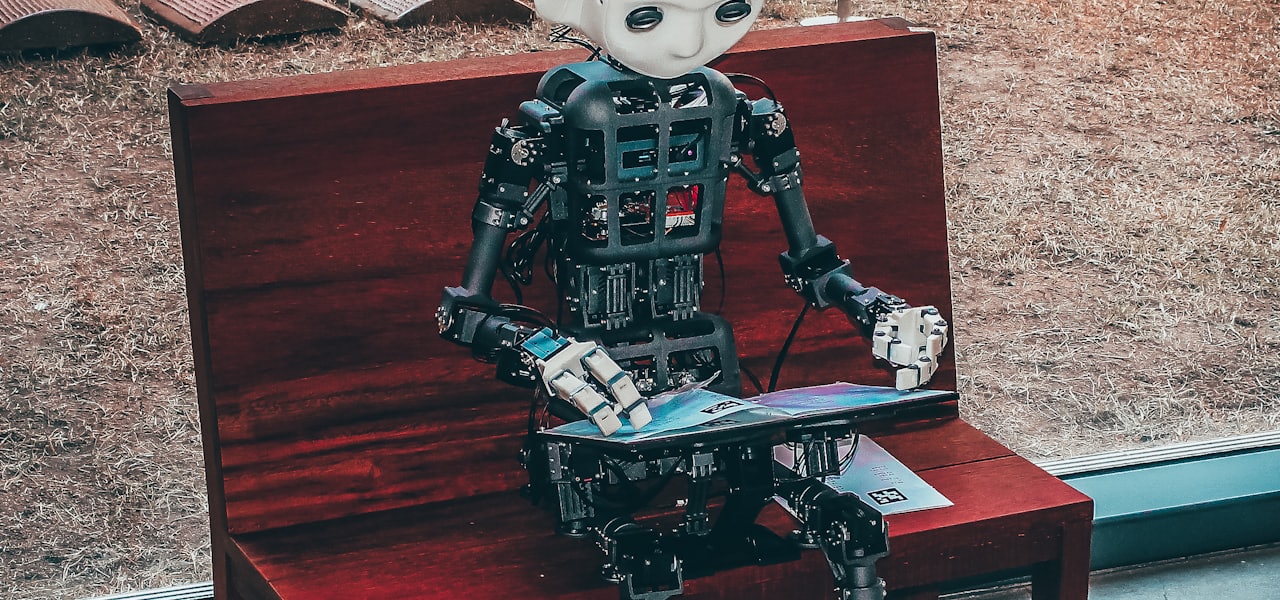
In artificial intelligence research, the situated approach builds agents that are designed to behave effectively successfully in their environment. This requires designing AI "from the bottom-up" by focussing on the basic perceptual and motor skills required to survive. The situated approach gives a much lower priority to abstract reasoning or problem-solving skills. The approach was originally proposed as an alternative to traditional approaches (that is, approaches popular before 1985 or so). After several decades, classical AI technologies started to face intractable issues (e.g. combinatorial explosion) when confronted with real-world modeling problems. All approaches to address these issues focus on modeling intelligences situated in an environment. They have become known as the situated approach to AI. == Emergence of a concept == === From traditional AI to Nouvelle AI === During the late 1980s, the approach now known as Nouvelle AI (Nouvelle means new in French) was pioneered at the MIT Artificial Intelligence Laboratory by Rodney Brooks. As opposed to classical or traditional artificial intelligence, Nouvelle AI purposely avoided the traditional goal of modeling human-level performance, but rather tries to create systems with intelligence at the level of insects, closer to real-world robots. But eventually, at least at MIT new AI did lead to an attempt for humanoid AI in the Cog Project. === From Nouvelle AI to behavior-based and situated AI === The conceptual shift introduced by nouvelle AI flourished in the robotics area, given way to behavior-based robotics (BBR), a methodology for developing AI based on a modular decomposition of intelligence. It was made famous by Rodney Brooks: his subsumption architecture was one of the earliest attempts to describe a mechanism for developing BBAI. It is extremely popular in robotics and to a lesser extent to implement intelligent virtual agents because it allows the successful creation of real-time dynamic systems that can run in complex environments. For example, it underlies the intelligence of the Sony Aibo and many RoboCup robot teams. Realizing that in fact all these approaches were aiming at building not an abstract intelligence, but rather an intelligence situated in a given environment, they have come to be known as the situated approach. In fact, this approach stems out from early insights of Alan Turing, describing the need to build machines equipped with sense organs to learn directly from the real-world instead of focusing on abstract activities, such as playing chess. == Definitions == Classically, a software entity is defined as a simulated element, able to act on itself and on its environment, and which has an internal representation of itself and of the outside world. An entity can communicate with other entities, and its behavior is the consequence of its perceptions, its representations, and its interactions with the other entities. === AI loop === Simulating entities in a virtual environment requires simulating the entire process that goes from a perception of the environment, or more generally from a stimulus, to an action on the environment. This process is called the AI loop and technology used to simulate it can be subdivided in two categories. Sensorimotor or low-level AI deals with either the perception problem (what is perceived?) or the animation problem (how are actions executed?). Decisional or high-level AI deals with the action selection problem (what is the most appropriate action in response to a given perception, i.e. what is the most appropriate behavior?). === Traditional or symbolic AI === There are two main approaches in decisional AI. The vast majority of the technologies available on the market, such as planning algorithms, finite-state machines (FSA), or expert systems, are based on the traditional or symbolic AI approach. Its main characteristics are: It is top-down: it subdivides, in a recursive manner, a given problem into a series of sub-problems that are supposedly easier to solve. It is knowledge-based: it relies on a symbolic description of the world, such as a set of rules. However, the limits of traditional AI, which goal is to build systems that mimic human intelligence, are well-known: inevitably, a combinatorial explosion of the number of rules occurs due to the complexity of the environment. In fact, it is impossible to predict all the situations that will be encountered by an autonomous entity. === Situated or behavioral AI === In order to address these issues, another approach to decisional AI, also known as situated or behavioral AI, has been proposed. It does not attempt to model systems that produce deductive reasoning processes, but rather systems that behave realistically in their environment. The main characteristics of this approach are the following: It is bottom-up: it relies on elementary behaviors, which can be combined to implement more complex behaviors. It is behavior-based: it does not rely on a symbolic description of the environment, but rather on a model of the interactions of the entities with their environment. The goal of situated AI is to model entities that are autonomous in their environment. This is achieved thanks to both the intrinsic robustness of the control architecture, and its adaptation capabilities to unforeseen situations. === Situated agents === In artificial intelligence and cognitive science, the term situated refers to an agent which is embedded in an environment. The term situated is commonly used to refer to robots, but some researchers argue that software agents can also be situated if: they exist in a dynamic (rapidly changing) environment, which they can manipulate or change through their actions, and which they can sense or perceive. Examples might include web-based agents, which can alter data or trigger processes (such as purchases) over the Internet, or virtual-reality bots which inhabit and change virtual worlds, such as Second Life. Being situated is generally considered to be part of being embodied, but it is useful to consider each perspective individually. The situated perspective emphasizes that intelligent behavior derives from the environment and the agent's interactions with it. The nature of these interactions are defined by an agent's embodiment. == Implementation principles == === Modular decomposition === The most important attribute of a system driven by situated AI is that the intelligence is controlled by a set of independent semi-autonomous modules. In the original systems, each module was actually a separate device or was at least conceived of as running on its own processing thread. Generally, though, the modules are just abstractions. In this respect, situated AI may be seen as a software engineering approach to AI, perhaps akin to object oriented design. Situated AI is often associated with reactive planning, but the two are not synonymous. Brooks advocated an extreme version of cognitive minimalism which required initially that the behavior modules were finite-state machines and thus contained no conventional memory or learning. This is associated with reactive AI because reactive AI requires reacting to the current state of the world, not to an agent's memory or preconception of that world. However, learning is obviously key to realistic strong AI, so this constraint has been relaxed, though not entirely abandoned. === Action selection mechanism === The situated AI community has presented several solutions to modeling decision-making processes, also known as action selection mechanisms. The first attempt to solve this problem goes back to subsumption architectures, which were in fact more an implementation technique than an algorithm. However, this attempt paved the way to several others, in particular the free-flow hierarchies and activation networks. A comparison of the structure and performances of these two mechanisms demonstrated the advantage of using free-flow hierarchies in solving the action selection problem. However, motor schemas and process description languages are two other approaches that have been used with success for autonomous robots. == Notes and references == Arsenio, Artur M. (2004) Towards an embodied and situated AI, In: Proceedings of the International FLAIRS conference, 2004. (online) The Artificial Life Route To Artificial Intelligence: Building Embodied, Situated Agents, Luc Steels and Rodney Brooks Eds., Lawrence Erlbaum Publishing, 1995. (ISBN 978-0805815184) Rodney A. Brooks Cambrian Intelligence (MIT Press, 1999) ISBN 0-262-52263-2; collection of early papers including "Intelligence without representation" and "Intelligence without reason", from 1986 & 1991 respectively. Ronald C. Arkin Behavior-Based Robotics (MIT Press, 1998) ISBN 0-262-01165-4 Hendriks-Jansen, Horst (1996) Catching Ourselves in the Act: Situated Activity, Interactive Emergence, Evolution, and Human Thought. Cambridge, Mass.: MIT Press.
Find It, Fix It
Find It, Fix It is a mobile app developed by the city of Seattle to report non-emergency issues. == History == The City of Seattle launched Find It, Fix It in 2013 for Android and iOS phones to let citizens report potholes, graffiti, and other problems they observe to the city. The app did not support Windows Phone, making it inaccessible to Microsoft employees in the city who used the company's then-supported mobile operating system. In 2015, Mayor Ed Murray led a Find It, Fix It walk with about 100 other people, including police officers, in the University District. Participants were encouraged to use the app to report problems they observed in the neighborhood. Later Find It, Fix It walks have taken place in neighborhoods including Crown Hill, First Hill, Belltown, Wallingford, and Highland Park. In 2020, Find It, Fix It added support for reporting issues with the dockless bicycle sharing systems in the city. Citing the success of Seattle’s app, the nearby city of Kent, Washington, announced that it would create a similar customer service app. == Usage == Users of Find It, Fix It can submit reports about graffiti, potholes, parking violations, broken street signs, and other issues. The app is designed to use a smartphone’s camera and GPS features to make it easier for users to file reports. The Atlantic reported in 2018 that Find It, Fix It was being used by neighborhood groups to report homeless encampments with the intention of having authorities remove them, citing examples of campaigns in Ravenna and Ballard. The executive director of Ballard Alliance, a local chamber of commerce for businesses in the neighborhood, used a private Facebook group to encourage business owners to use the app to report homeless encampments. In response to a poster campaign in the summer of 2019 with the slogan “See a tent? Report a tent”, a representative for the mayor’s office and two Seattle City Council members said that it was inappropriate to encourage use of Find It, Fix It to displace homeless people. As a backlash to these campaigns, people living far from Seattle filed hoax complaints using the app, such as by using photos of tents on display at REI stores. According to the Seattle Times, between January 1, 2020, and November 15, 2021, the city had received over 230,000 service requests, of which 77% were submitted via Find It, Fix It. The largest category of these, numbering over 55,000, concerned illegal dumping. Of complaints categorized as "parking", 3,000 had comments explicitly mentioning issues around homelessness. The ZIP code 98134, covering an industrial area south of Pioneer Square and north of Georgetown, had 5,559 service requests per 1,000 residents, by far the highest in the city.
Pythia (machine learning)
Pythia is an ancient text restoration model that recovers missing characters from damaged text input using deep neural networks. It was created by Yannis Assael, Thea Sommerschield, and Jonathan Prag, researchers from Google DeepMind and the University of Oxford. To study the society and the history of ancient civilisations, ancient history relies on disciplines such as epigraphy, the study of ancient inscribed texts. Hundreds of thousands of these texts, known as inscriptions, have survived to our day, but are often damaged over the centuries. Illegible parts of the text must then be restored by specialists, called epigraphists, in order to extract meaningful information from the text and use it to expand our knowledge of the context in which the text was written. Pythia takes as input the damaged text, and is trained to return hypothesised restorations of ancient Greek inscriptions, working as an assistive aid for ancient historians. Its neural network architecture works at both the character- and word-level, thereby effectively handling long-term context information, and dealing efficiently with incomplete word representations. Pythia is applicable to any discipline dealing with ancient texts (philology, papyrology, codicology) and can work in any language (ancient or modern).